Here I am in early August. July seems to have been swallowed up into a memory hole. This happens often enough in the summer, when the heat rises, the activities increase, and one ping-pongs from task to task.
I stumbled back into memoir the month of July. I started by reading Fifty Sounds by Polly Barton, a translator specialized in Japanese-to-English translations of literature and nonfiction. The author writes of over fifteen years of her life, stretching from university in England to her time as a JET English instructor in Japan, through a vibrant, often funny, exploration of learning a second language. It would be too simple to stop with that explanation, because Ms. Barton's time in Japan is not purely a language-learning exercise that starts her on her journey to becoming a translator.
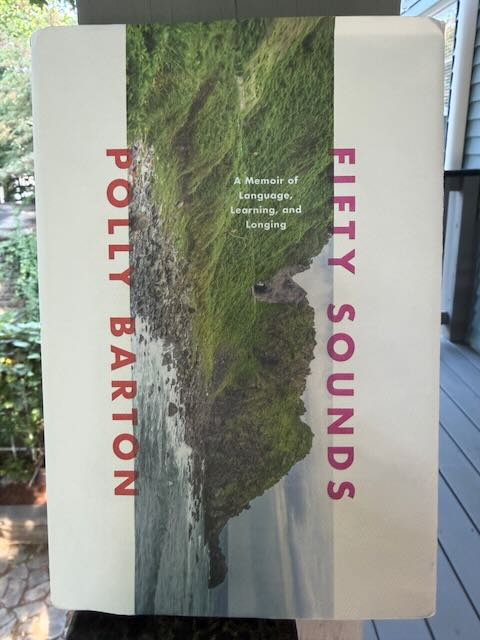
Within the fifty chapters of the book, each titled with a different onomatopoetic Japanese phrase, the complex overlap of language and culture is coaxed out of anecdote and considered beside philosophers (Wittgenstein). A chapter titled "nuru-nuru: the slippery sound of knowing the lingo" recounts how certainty about a word may quickly twist into embarrassment as alternate meanings (contextual aspects) are revealed when used in conversation. That which you looked up during study, or used in a familiar context, may mean more than you think.
Excellent book. Deep and beautiful, with a clear delight for language and it's complexities.
While Alison Croggon also delights in language and incorporates a broader cultural context into her memoir, Monsters: a reckoning is more akin to an extended essay on the myths originating in colonialism, patriarchy, and racism seen through one persons (and their family history) perspective. Croggon is a poet, librettist, playwright, and novelist. Monsters uses the story of her fractured relationship to one of her sisters as the framework to explore those myths in an intensely personal and often gasp-inducing way. When I was reading this memoir, I'd often turn the page, read a phrase, and be immediately compelled to take a picture and send it to my sister with comments like "So good".
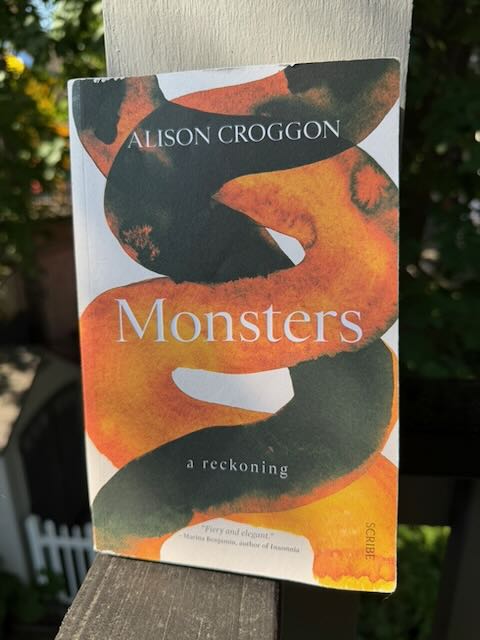
An example: "Who I am is so deeply conditioned by the culture in which I was raised that I don't believe that I will ever escape it: I am a painful work in progress, apt to failure. I can only, as I once heard said kindly of an acquaintance, do my best. And the truth is that often my best isn't very good." Croggon never gets to a single point or a resolution of the conflict among her and her sister and I think that's the point! The book reveals meaning in hidden places of history, genocides covered over by the history written by the victors, and the ongoing erasure of cultures and environments.
I was often challenged by the book, its complexity of language (I looked up more than several handfuls of words while reading it, which is unusual for me), and the intensity with which the author faces the legacies that shape her and her family. Very worthwhile reading for a different perspective on the horrors of empire, capitalism, and colonial excess. This book leads to more books, as Croggon cites many authors along the way.
Disclosure: This post contains affiliate links. I am an affiliate of Bookshop.org and I will earn a commission if you click through and make a purchase.